- Programs & Activities
- Golf
- Schedules
- Parks & Facilities
- Rentals & Reservations
- News & Events
Bismarck Parks and Recreation District is committed to providing and facilitating public art of quality and diversity which adds to the community’s vibrancy and identity. The Park Board has approved a Public Art Statement of Present Position. Below are a few places to view public art, along with historical and cultural displays, within the BPRD system.
BPRD also partners with Dakota West Arts Council to present Arts in the Parks programming each summer. See our Event Calendar for arts programming.
Dakota West Arts Council and Bismarck Parks and Recreation District joined forces to create, install, and fill Poetry Boxes throughout Bismarck’s parks to showcase local poetry or favorite poems for all to enjoy.
In celebration of the Lewis and Clark Bicententennial, Bismarck Parks and Recreation District, along with United Tribes Technical College and Bismarck-Mandan Convention and Visitors Bureau, worked together to create a series of public art pieces along the Missouri Valley Legacy Trail, enhancing the park and trail system experience along the scenic Missouri River for both visitors and residents of Bismarck-Mandan. In collaboration with students in the Art/Art Marketing Department at UTTC, a series of five eagle sculptures were created along the trail. The student artists were responsible for the design, creation, and construction.
To Native people, the four directions and four colors of a medicine wheel signify the diversity and unity in the circle of life. The mosaic art represents the pride and beauty of our land and the eagles soaring above are keeping watch over the people while protecting their young. “Gathering of Visions” is an interpretation of the circle of life and the diverse cultures within the state of North Dakota. It is a reminder to people to live in balance and harmony.
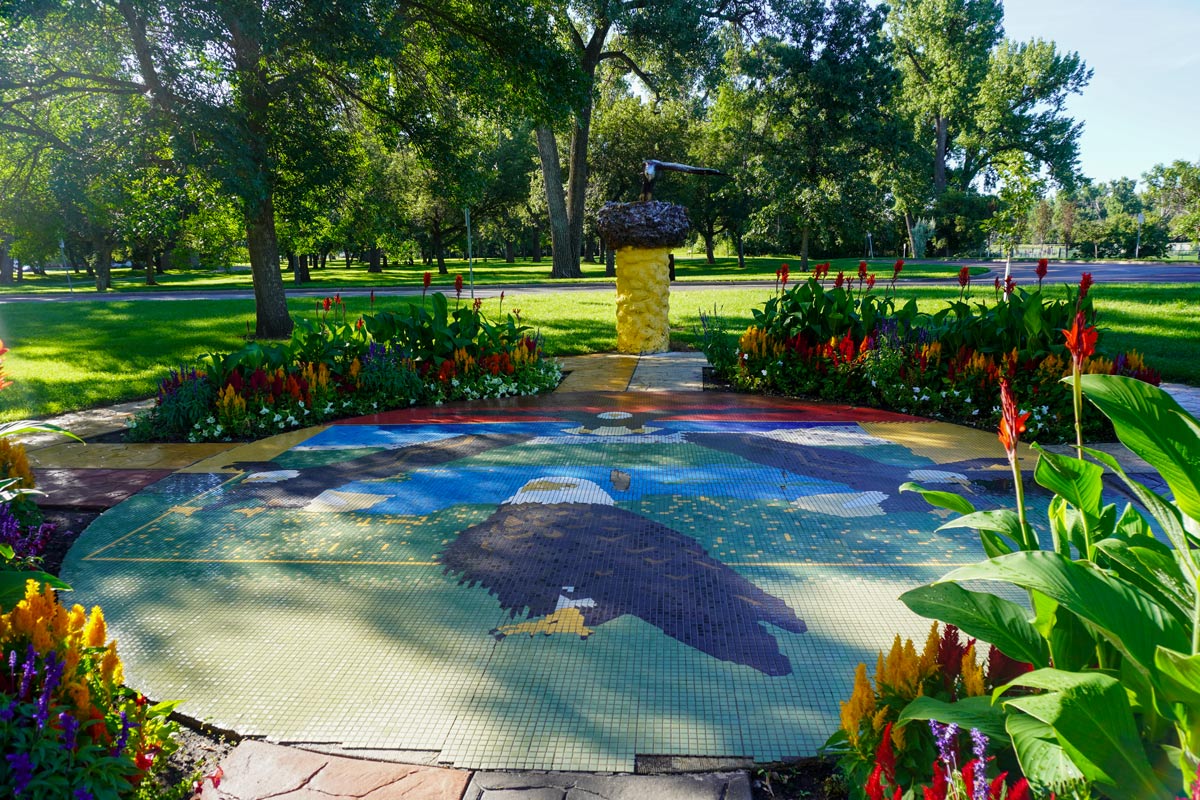
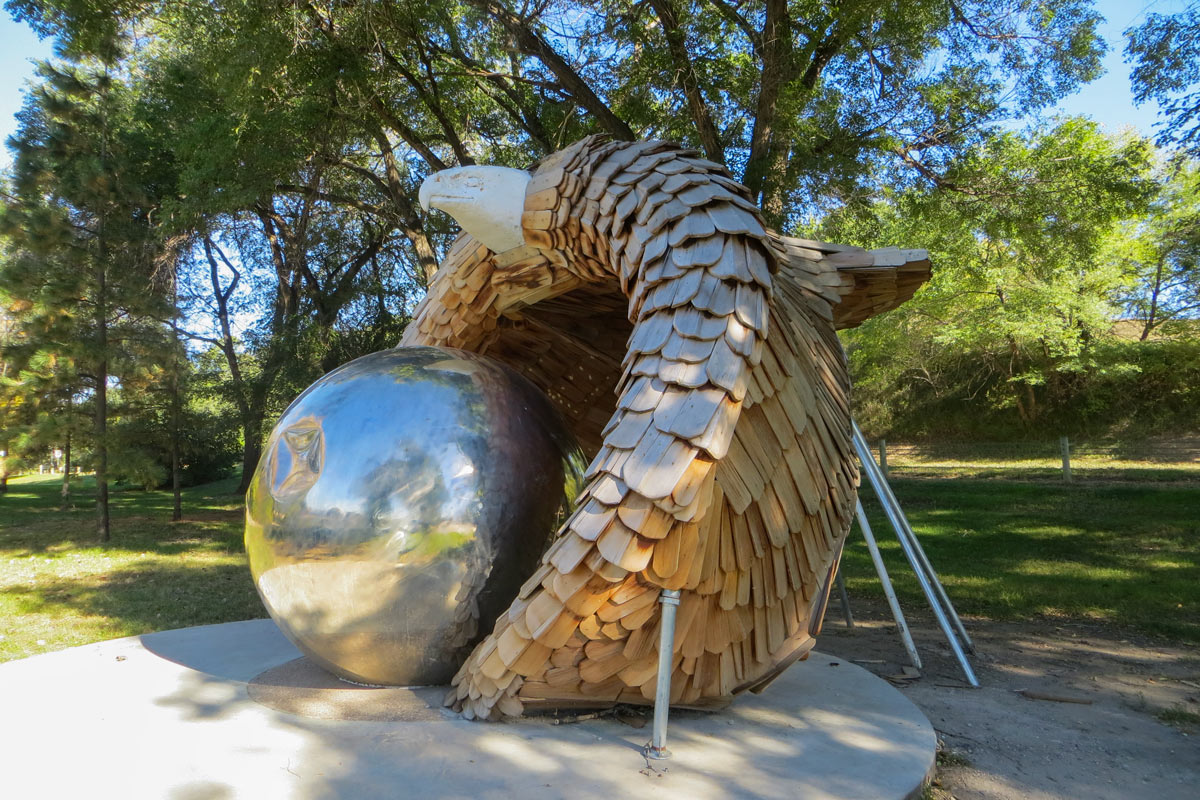
The earth is mother to all nations and must be honored by all who dwell upon it. The majestic eagles are courageous “masters of the sky.” To the Native people, they are seen as messengers that carry our prayers to the spirit world. A spirit eagle with its powerful wings engulfs the earth to create balance between all living things so that we may live in harmony. “Reflections” serves as a reminder to treat all beings with respect as all living things have a spirit.
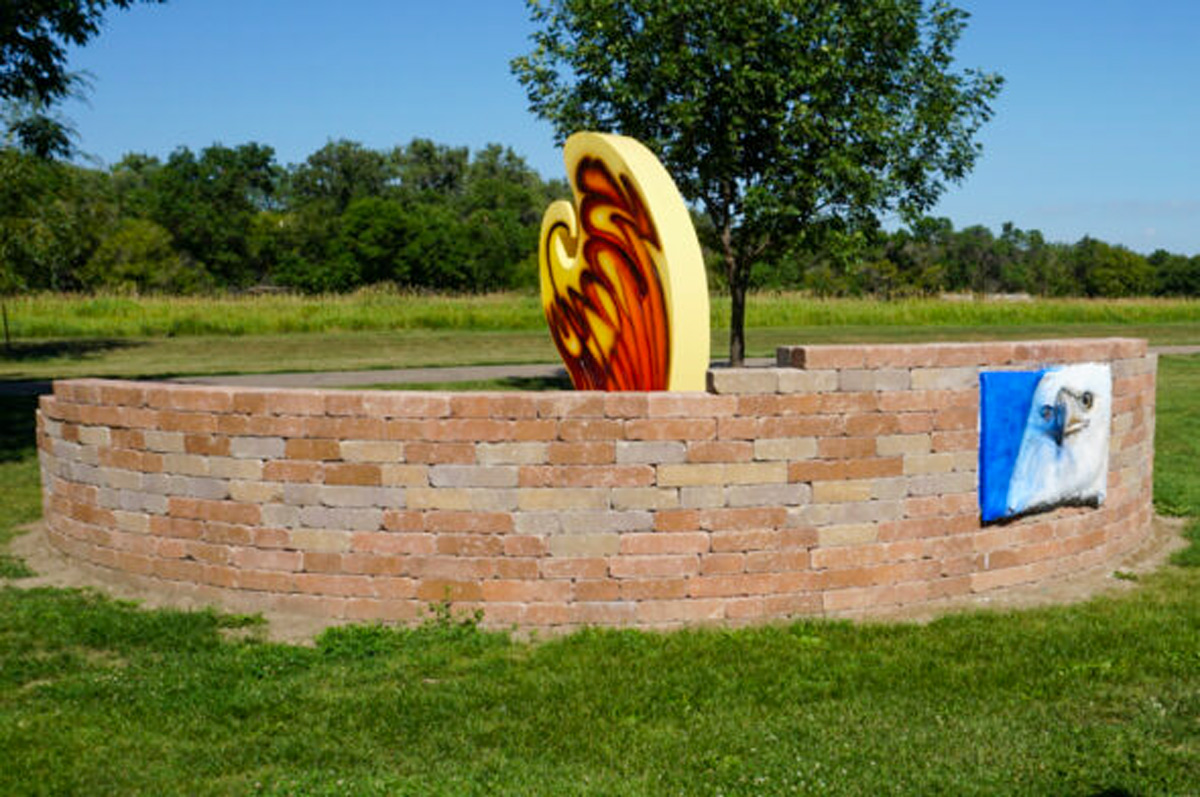
This creature speaks directly with Wakan Tanka (the great mystery) and is guided by his will. He hears our prayers and carries them to our creator. In this sculpture, the Eagle is being portrayed in a contemporary context. The circular wall that encompasses Rising Eagle represents the earth. Attached to the wall is a bench that welcomes the public to sit and reflect. With careful thought and consideration, the original Rising Eagle was replaced in 2020.
This eagle represents the community, the state and the nation. We are beautiful, humble, independent, and strong people. These values are old as time and will be used always for many generations to come. This eagle is a symbol of protection, strength, and freedom. The eagle has many different types, looks, colors, habitats – much like us. We come together as one, in a time of need, a time of sorrow and a time of happiness. We come together to make one community, one state, and one nation. No matter what our color is, what we look like, or where we came from. That is what make us “one.”
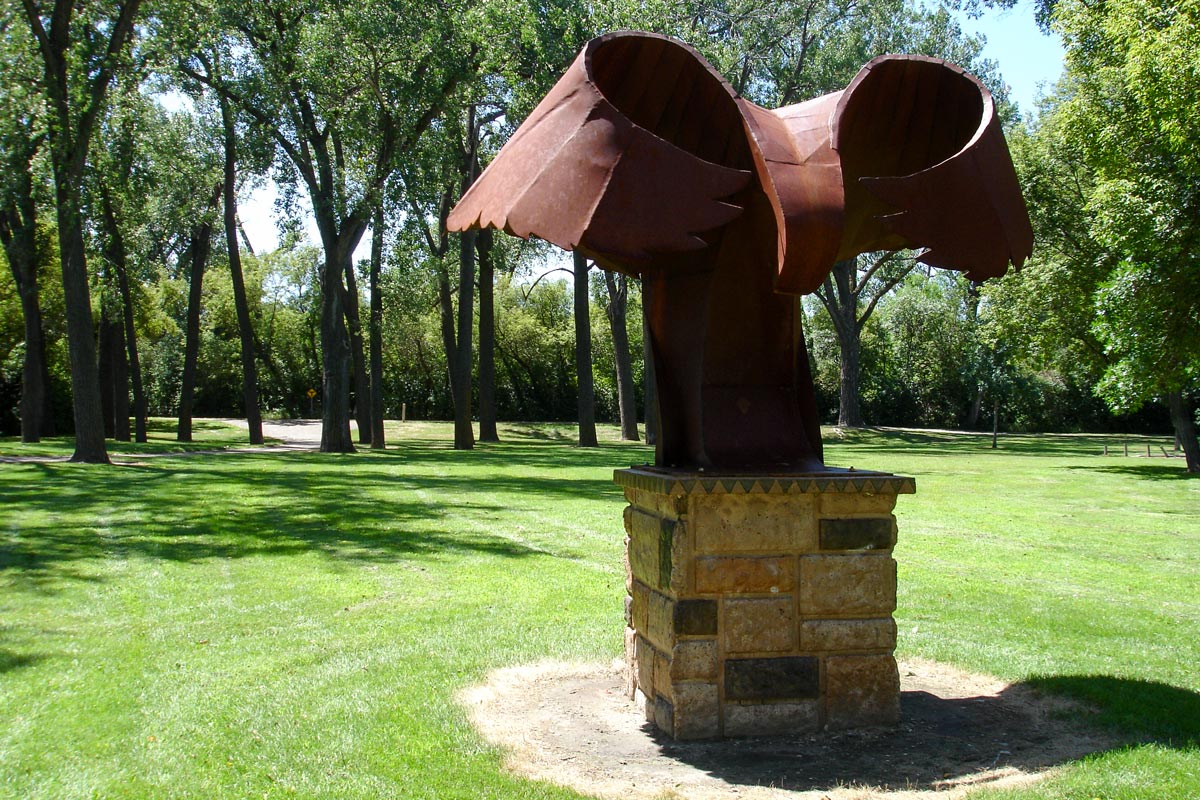
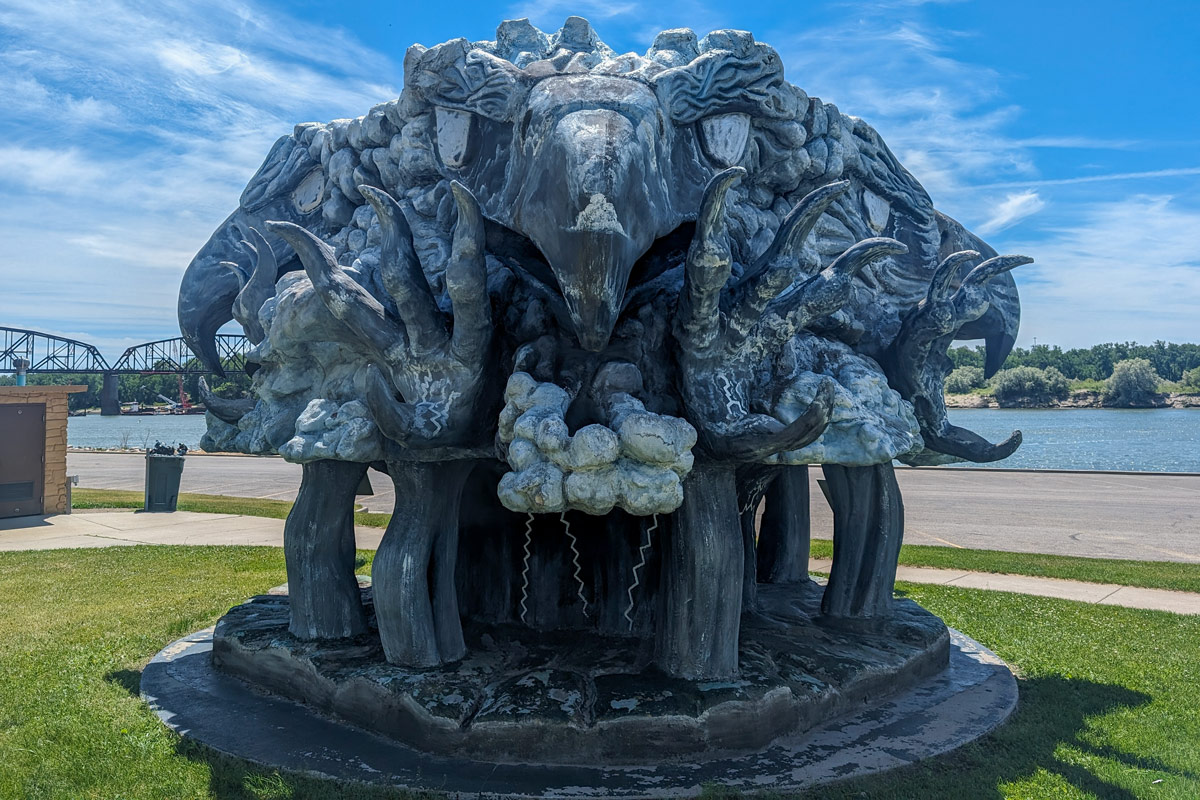
Throughout history, as early as the third millennium B.C., stories about giant birds often associated with thunderstorms appeared in many parts of the world. To the Native peoples, the Thunderbird is a belief. He is not known as a myth. Native American lore tells us that the Thunderbirds are part of the Great Spirit who lives among us in the clouds. They are not like living beings but enormous Gods. The Thunder being carries a storm to extreme measures, lightning flashes from his eyes and produces thunder by the flapping of his wings.